If you’re thinking about buying a home, you’ve probably wondered:
“What credit score do I need to get a mortgage?”
It’s one of the most common questions we hear from homebuyers throughout Charlotte, Fort Mill, Indian Land, Rock Hill, Lancaster, Waxhaw, Matthews, and surrounding communities.
The good news is that you don’t need perfect credit to buy a home.
In fact, many successful homeowners purchase properties every year with credit scores that are far from perfect.
Understanding how mortgage lenders evaluate credit—and how your score impacts loan options—can help you make smarter financial decisions and potentially save thousands of dollars over the life of your mortgage.
Why Credit Scores Matter
Credit scores help lenders evaluate risk.
Your score provides insight into your history of:
- Making payments on time
- Managing debt responsibly
- Maintaining credit accounts
- Handling financial obligations
While credit scores are important, they are only one part of the mortgage approval process. Lenders also consider:
- Income
- Assets
- Employment
- Debt-to-income ratio
- Down payment
- Overall financial profile
A strong credit score can improve your mortgage options, but it isn’t the only factor.
What Is a Credit Score?
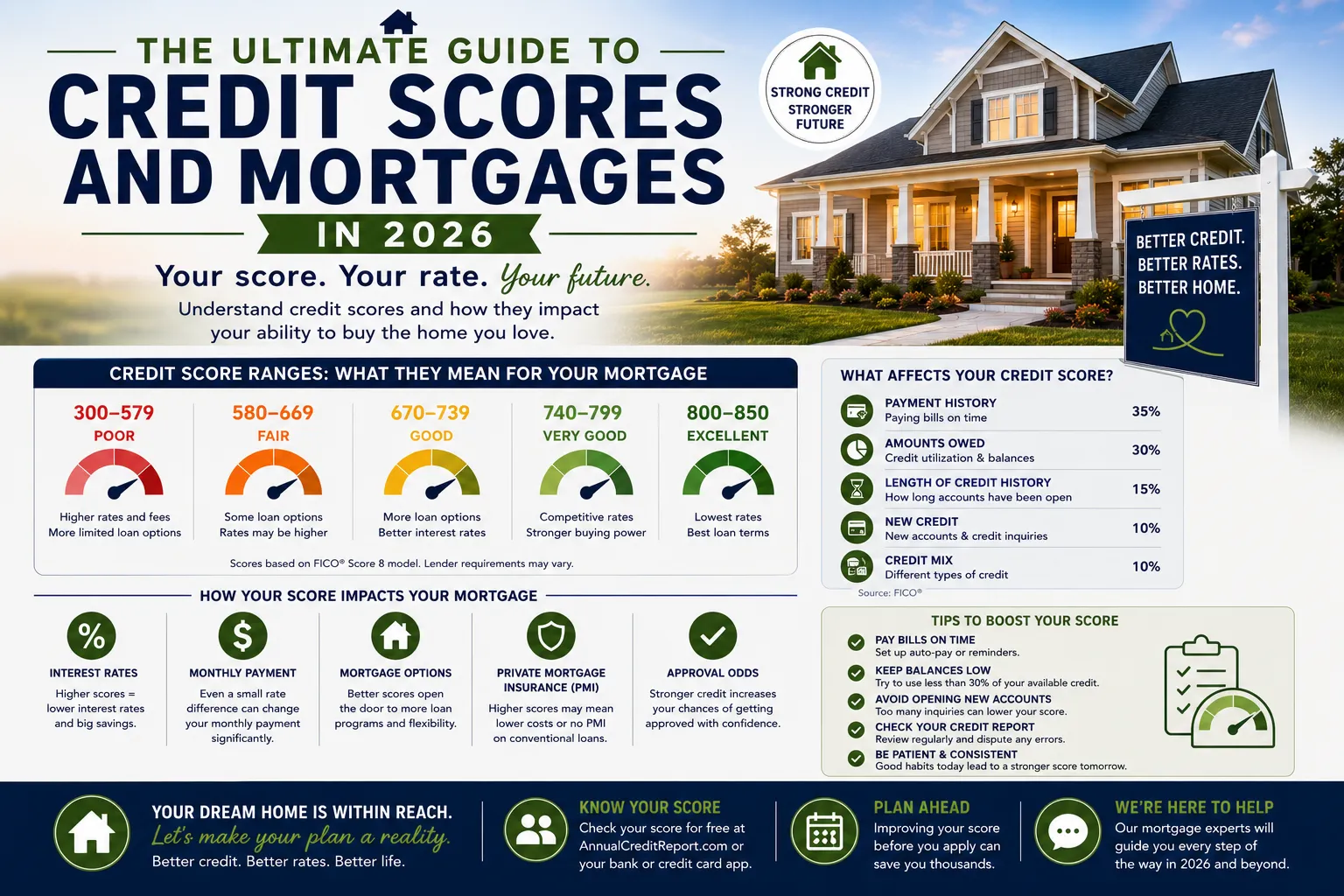
A credit score is a numerical representation of your credit history. Most mortgage lenders use scoring models that generally range from:
300 to 850
Higher scores typically indicate lower lending risk.
While every lender has different guidelines, scores are often viewed as follows:
Excellent Credit
740+
Good Credit
700–739
Fair Credit
620–699
Challenging Credit
Below 620
Remember, these ranges are general guidelines.
Mortgage qualification depends on much more than a single number.
How Credit Scores Affect Mortgage Rates
One of the biggest impacts of your credit score is the interest rate you receive. Generally speaking:
Higher Scores May Receive
- Better interest rates
- Lower monthly payments
- More financing options
Lower Scores May Receive
- Higher rates
- Increased mortgage insurance costs
- Additional underwriting requirements
Even small differences in rate can significantly impact long-term borrowing costs.
Common Mortgage Credit Score Requirements
Requirements vary by lender and loan program.
Conventional Loans
Often provide the best pricing for borrowers with strong credit.
FHA Loans
Generally offer more flexibility for borrowers with lower credit scores.
VA Loans
Available to eligible veterans and active-duty service members.
USDA Loans
Available in eligible rural areas.
Each program has unique qualification guidelines. This is why comparing options is important.
What Factors Impact Your Credit Score?
Several factors influence credit scoring.
Payment History
The most important factor.
Late payments can significantly impact scores.
Credit Utilization
The percentage of available credit currently being used. Lower utilization is generally better.
Length of Credit History
Older accounts can positively influence scores.
Credit Mix
Different types of accounts may contribute positively.
New Credit Inquiries
Opening multiple accounts in a short period can affect scores.
Understanding these factors can help borrowers improve their profile over time.
The Biggest Credit Score Myths
Myth #1: You Need Perfect Credit to Buy a Home
False.
Many buyers qualify with less-than-perfect credit.
Myth #2: Checking Your Credit Hurts Your Score
Checking your own credit generally does not negatively impact your score.
Myth #3: Closing Credit Cards Always Helps
Not necessarily.
Closing accounts can sometimes reduce available credit and increase utilization.
Myth #4: Paying Off Collections Always Improves Scores Immediately
Results vary depending on the account and scoring model.
How to Improve Your Credit Before Applying
If you’re planning to buy a home within the next year, consider these strategies.
Make Payments On Time
Payment history remains the most important factor.
Reduce Credit Card Balances
Lower utilization often improves scores.
Avoid Opening New Debt
New accounts can affect qualification.
Review Your Credit Report
Identify inaccuracies and address issues early.
Consult a Mortgage Professional
Sometimes the fastest path to improvement isn’t obvious.
A mortgage review can help identify opportunities.
Credit Scores and Down Payments
Many buyers assume:
“If my credit score is lower, I’ll need a huge down payment.”
This isn’t always true.
Various programs offer low down payment options, including:
Conventional Loans
As little as 3% down in some cases.
FHA Loans
As little as 3.5% down.
VA Loans
Zero down payment for eligible veterans.
USDA Loans
Zero down payment in eligible areas.
The right option depends on your overall profile.
Credit Scores and Mortgage Insurance
Credit scores can influence mortgage insurance costs. For example:
Conventional Financing
Mortgage insurance pricing often varies based on credit profile.
FHA Financing
Mortgage insurance is generally more standardized.
This is one reason borrowers should compare loan programs rather than focusing solely on rates.
Should You Wait to Buy Until Your Score Improves?
The answer depends on your goals.
Sometimes improving a score before purchasing makes sense.
Other times, buyers discover they already qualify for attractive financing options.
Questions to consider include:
- How long will improvement take?
- Are home prices increasing?
- Are rents increasing?
- How much could better pricing save?
A personalized mortgage consultation can help answer these questions.
Common Credit Mistakes Before Closing
Once you’re pre-approved, avoid:
Financing Furniture Purchasing a Vehicle Opening New Credit Cards Missing Payments
These actions can affect qualification before closing.
Why Pre-Approval Matters
A mortgage pre-approval provides a clear picture of:
- Available loan programs
- Credit score impact
- Estimated payments
- Improvement opportunities
Many buyers discover they qualify sooner than expected.
Others learn simple steps that can strengthen their profile before purchasing.
Why Work With Carolina Mortgage Firm?
At Carolina Mortgage Firm, we help buyers throughout:
- Charlotte
- Fort Mill
- Indian Land
- Rock Hill
- Lancaster
- Matthews
- Waxhaw
- Belmont
- Concord
- Huntersville
Understand their credit profile and identify mortgage solutions tailored to their needs. We compare:
- FHA Loans
- Conventional Loans
- VA Loans
- USDA Loans
- Jumbo Loans
- Specialty Financing
to help clients maximize their opportunities.
Frequently Asked Questions
What Credit Score Do I Need to Buy a Home?
Requirements vary by loan program and lender.
Can I Buy a House With a 620 Credit Score?
In many cases, yes.
Does Paying Off Credit Cards Help?
Often yes, particularly if utilization decreases.
How Can I Improve My Score Quickly?
Reducing balances and making on-time payments are often effective strategies.
Should I Wait Until My Score Is Higher?
That depends on your goals and timeline.
Related Mortgage Resources
- Mortgage Pre-Approval Guide
- FHA vs Conventional Loans
- First-Time Homebuyer Programs
- How Much House Can I Afford?
- Down Payment Assistance Programs
- Buying a Home With Student Loan Debt
Ready to Explore Your Mortgage Options?
Whether you’re buying your first home in Charlotte, moving to Fort Mill, purchasing in Indian Land, upgrading in Rock Hill, or relocating to Lancaster County, Carolina Mortgage Firm can help you understand how your credit profile affects your mortgage options.
Contact our team today for a personalized mortgage consultation and pre-approval.