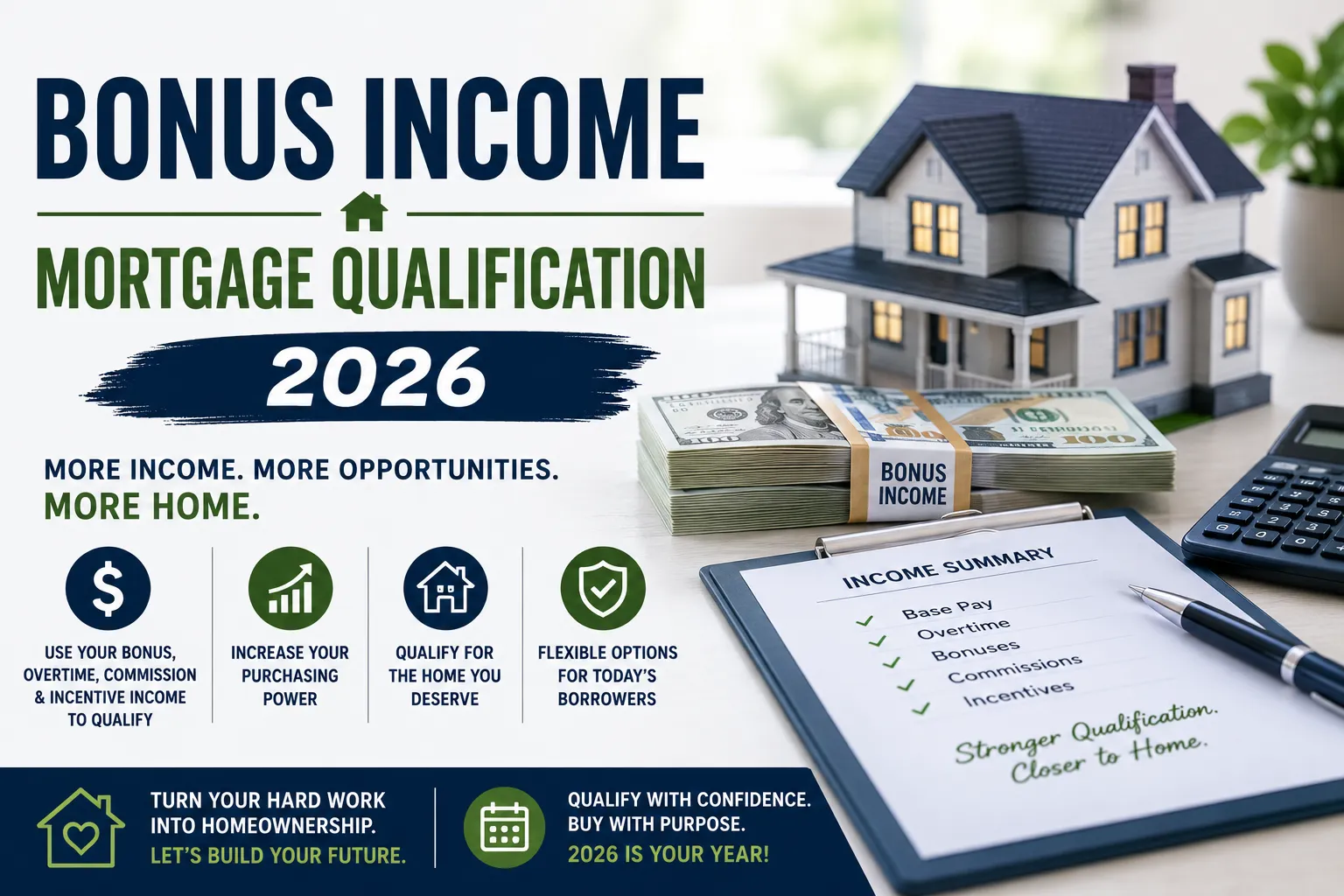
Many homebuyers receive a significant portion of their compensation through annual, quarterly, or performance-based bonuses.
One of the most common questions we hear at Carolina Mortgage Firm is:
“Can my bonus income be used to help me qualify for a mortgage?”
The answer is:
Yes, in many cases bonus income can be used for mortgage qualification.
In fact, using bonus income often helps buyers qualify for larger loan amounts and expand their homebuying options.
At Carolina Mortgage Firm, we help buyers throughout Charlotte, Fort Mill, Indian Land, Rock Hill, Lancaster, Matthews, Waxhaw, Belmont, Huntersville, and surrounding communities understand how bonus income is evaluated and how it impacts mortgage approval.
Let’s take a closer look at how lenders review bonus income.
Quick Answer: Bonus Income Is Often Allowed
Most conventional mortgage programs allow bonus income when it can be properly documented and is reasonably expected to continue.
Lenders typically evaluate:
Bonus History
How long you’ve been receiving bonuses.
Consistency
Whether bonuses occur regularly.
Employer Verification
Whether your employer expects bonuses to continue.
Income Stability
The overall strength of your employment profile.
Because every situation is different, bonus income is reviewed on a case-by-case basis.
What Is Considered Bonus Income?
Bonus income generally includes compensation that is paid in addition to your regular base salary or hourly wages.
Examples include:
Annual Bonuses
Performance or company-wide bonuses paid yearly.
Quarterly Bonuses
Bonuses paid every three months.
Production Bonuses
Common in sales and production environments.
Performance Incentives
Compensation tied to goals or achievements.
Retention Bonuses
Bonuses designed to encourage employee retention.
Many professionals receive substantial compensation through these programs.
Why Lenders Review Bonus Income Carefully
Unlike base salary, bonus income is not always guaranteed. Lenders want to determine whether the income is:
Stable Consistent
The goal is ensuring borrowers can comfortably repay their mortgage even if income fluctuates.
How Much Bonus History Do I Need?
In most situations, lenders prefer to see:
Two-Year History
A two-year history of receiving bonus income is generally considered the strongest documentation. However, this does not automatically mean less than two years is unacceptable.
Certain situations may allow lenders to evaluate shorter histories when supported by strong compensating factors.
Every file is reviewed individually.
How Is Bonus Income Calculated?
Lenders typically evaluate bonus income using historical earnings. For example:
Year 1 Bonus: $8,000
Year 2 Bonus: $12,000
Average Annual Bonus: $10,000 Monthly Qualifying Income: $833
This additional income may significantly improve purchasing power.
Actual calculations vary depending on program guidelines and documentation.
What Documentation Is Required?
Bonus income generally requires documentation such as:
W-2 Forms
To verify historical earnings.
Pay Stubs
Showing current bonus income when applicable.
Written Verification of Employment
Confirming employment details.
Employer Statements
Sometimes used to verify continuance expectations.
Complete documentation helps ensure a smooth underwriting process.
What If My Bonus Income Is Increasing?
This is common.
Many professionals receive larger bonuses as their careers advance. Examples include:
- Corporate employees
- Healthcare professionals
- Financial advisors
- Sales professionals
- Executives
Increasing bonus trends are generally viewed more favorably than declining bonus patterns. However, lenders still evaluate consistency and likelihood of continuation.
What If My Bonus Income Varies Every Year?
Variation is normal.
Many bonus structures fluctuate based on:
- Company performance
- Individual performance
- Market conditions
- Production levels
Lenders understand that bonus income may not be identical every year. The focus is often on establishing a reasonable qualifying average.
Common Careers That Use Bonus Income
We frequently help buyers in professions such as:
Banking and Finance Healthcare Pharmaceutical Sales Technology Manufacturing Corporate Management Insurance
Bonus income is extremely common in the Charlotte Metro area’s professional workforce.
Bonus Income vs Commission Income
Many borrowers confuse these two income types.
Bonus Income
Typically supplemental compensation paid periodically.
Commission Income
Compensation directly tied to sales production.
While both may be used for qualification, they are often evaluated differently. Understanding the distinction is important during underwriting.
Common Bonus Income Myths
Myth #1: Bonus Income Never Counts
False.
Bonus income is frequently used for qualification.
Myth #2: I Must Receive the Exact Same Bonus Every Year
False.
Variation is common.
Myth #3: One Bonus Is Enough
Usually not.
Lenders typically prefer an established history.
Myth #4: Only Salaried Employees Can Use Bonus Income
False.
Bonus income may accompany various compensation structures.
How Bonus Income Can Increase Purchasing Power
Many borrowers underestimate the impact of bonus income. For example:
Base Salary: $85,000
Average Annual Bonus: $15,000 Qualifying Income: $100,000
This additional income may increase:
Loan Amount Eligibility Home Price Range Financing Flexibility Overall Buying Power
Using all eligible income can make a meaningful difference.
Why Pre-Approval Matters
If you receive bonus income, pre-approval is especially important. Benefits include:
Accurate Income Analysis
Determine what bonus income may be eligible.
Budget Planning
Understand your purchasing power.
Loan Comparison
Review Conventional, FHA, VA, and USDA options.
Stronger Offers
Shop confidently with a verified approval.
Why Work With Carolina Mortgage Firm?
At Carolina Mortgage Firm, we help buyers throughout:
- Charlotte
- Fort Mill
- Indian Land
- Rock Hill
- Lancaster
- Matthews
- Waxhaw
- Belmont
- Huntersville
- Concord
understand how bonus income impacts mortgage qualification. Because we work with multiple lenders, we can compare:
- Conventional Loans
- FHA Loans
- VA Loans
- USDA Loans
- Jumbo Loans
to identify the financing solution that best fits your goals.
Frequently Asked Questions
Can Bonus Income Be Used for a Mortgage?
Often yes.
How Much Bonus History Do I Need?
Generally, lenders prefer an established history, often two years.
Can Increasing Bonus Income Help Me Qualify?
Yes, in many situations.
Do I Need Employer Verification?
Often yes.
Should I Get Pre-Approved Before House Hunting?
Absolutely.
Related Conventional Resources
- What Credit Score Is Needed for a Conventional Loan?
- Can I Buy a Home With 3% Down?
- How Long Is a Mortgage Pre-Approval Good For?
- Can Commission Income Be Used for a Mortgage?
- What Are Conventional Loan Limits in 2026?
Ready to See How Your Bonus Income Impacts Your Buying Power?
Whether you’re a corporate employee in Charlotte, a healthcare professional in Fort Mill, a financial advisor in Rock Hill, or a sales executive in Lancaster County, Carolina Mortgage Firm can help determine how your bonus income fits into your mortgage qualification.
Contact Carolina Mortgage Firm today for a personalized mortgage consultation and pre-approval.