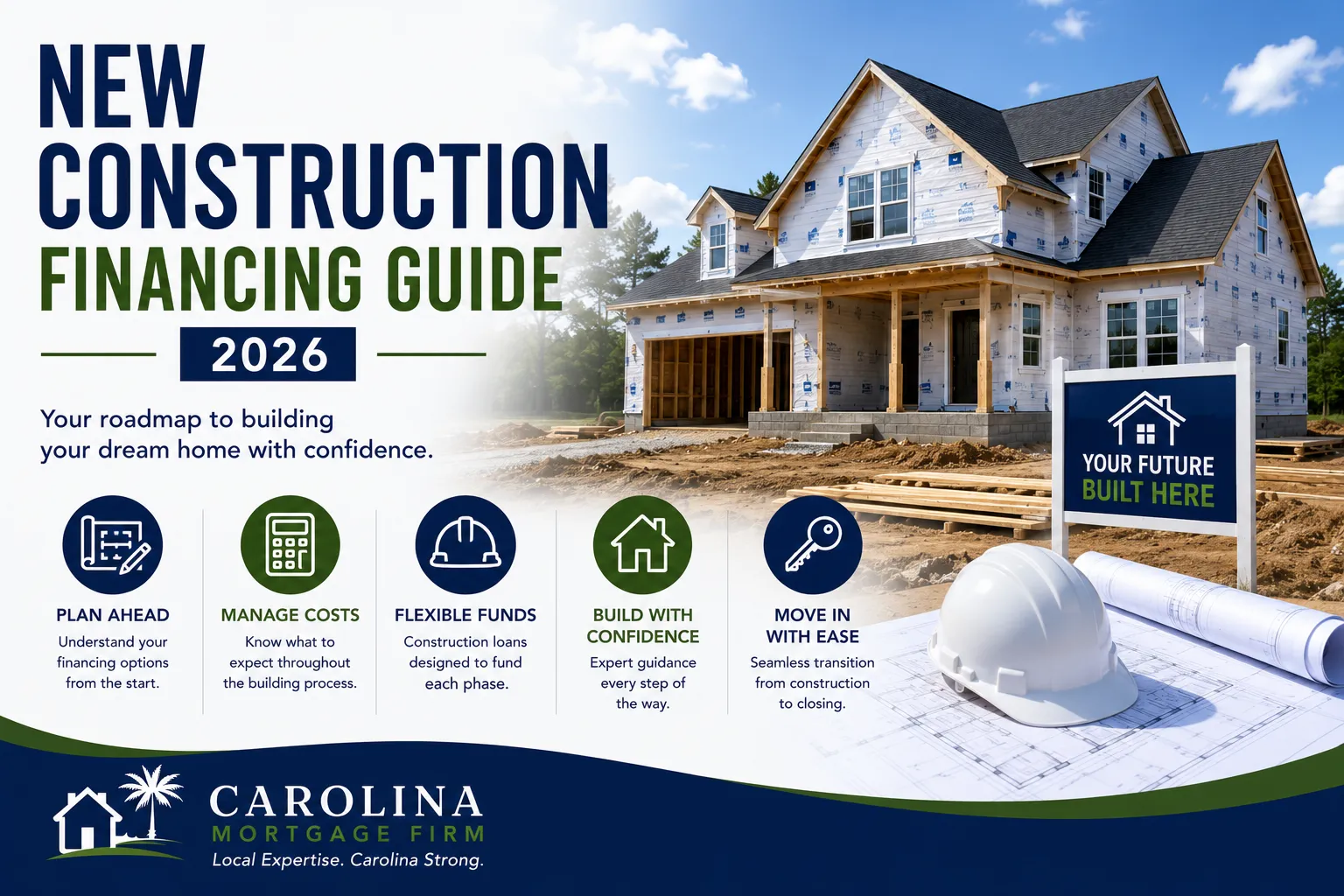
Building a brand-new home is an exciting experience. You get to choose your floor plan, select finishes, customize features, and move into a home that is designed specifically for your family’s needs.
However, financing a newly constructed home is often different from purchasing an existing property.
At Carolina Mortgage Firm, many buyers throughout Charlotte, Fort Mill, Indian Land, Rock Hill, Lancaster, Waxhaw, Matthews, and surrounding communities are surprised to discover that builder contracts, financing timelines, rate lock strategies, and closing costs can differ significantly from a traditional home purchase.
Understanding these differences before signing a builder contract can save time, money, and frustration.
Why Buyers Choose New Construction
The Carolinas continue to experience tremendous population growth. As a result, builders are developing communities throughout:
- Charlotte
- Fort Mill
- Indian Land
- Lancaster
- Rock Hill
- Waxhaw
- Belmont
- Huntersville
- Concord
New construction remains attractive because buyers can often enjoy:
Modern Floor Plans
Today’s homes are designed around how families actually live.
Open layouts, larger kitchens, home offices, and flexible living spaces continue to be popular.
Energy Efficiency
New homes often include:
- Improved insulation
- Energy-efficient windows
- Modern HVAC systems
- Smart home technology This can help reduce utility costs.
Builder Warranties
Many builders provide warranties covering certain structural and mechanical components.
Less Immediate Maintenance
Everything is new, reducing the likelihood of major repairs during the first several years of ownership.
How New Construction Financing Differs
Many buyers assume financing a newly built home works exactly like financing an existing home. In some cases, that’s true.
However, new construction transactions often involve additional considerations. Examples include:
- Longer timelines
- Builder contracts
- Extended rate lock decisions
- Upgrade selections
- Builder incentives
- Appraisal timing
Understanding these variables is critical.
Builder’s Preferred Lender: Should You Use Them?
One of the first questions buyers encounter is: “Should I use the builder’s preferred lender?” The answer depends on the situation.
Potential Advantages
Builders frequently offer incentives such as:
- Closing cost credits
- Design center credits
- Appliance packages
- Temporary rate buydowns
These incentives can provide significant value.
Potential Disadvantages
Sometimes buyers assume the builder’s lender is automatically the best financing option. That’s not always true.
Buyers should compare:
- Interest rates
- Fees
- Loan programs
- Long-term costs
The goal is maximizing total value rather than focusing solely on incentives.
Types of New Construction Financing
Several financing options may be available.
Conventional Loans
Popular for buyers with strong credit and stable income.
Benefits include:
- Low down payment options
- Competitive rates
- Flexible loan terms
FHA Loans
Often attractive for first-time buyers. Benefits include:
- 3.5% down payment
- Flexible credit requirements
VA Loans
Eligible veterans may benefit from:
- No down payment
- No monthly PMI
- Competitive rates
USDA Loans
Certain new construction communities may qualify depending on location.
Understanding Builder Deposits
Most builders require deposits during the construction process. Common deposits include:
Earnest Money
Submitted when signing the purchase agreement.
Design Center Deposits
Required when selecting upgrades and customizations.
Additional Builder Deposits
Some builders may require additional funds as construction progresses. These deposits are typically credited toward closing.
However, buyers should understand refund policies before committing.
Upgrades Can Impact Financing
One of the most common mistakes buyers make is underestimating upgrade costs. Builder models often showcase:
- Upgraded flooring
- Premium countertops
- Expanded patios
- Custom cabinetry
- Luxury appliances
Many of these features are not included in the base price. It’s important to evaluate:
Total Purchase Price
Not just the advertised starting price.
Monthly Payment Impact
Upgrades increase financing needs.
Budget Flexibility
Avoid stretching finances beyond comfortable levels.
Mortgage Rate Locks and New Construction
New construction introduces unique rate lock considerations.
Unlike existing homes that may close within 30-45 days, construction timelines often extend much longer. Common timelines include:
- 4 months
- 6 months
- 8 months
- 12 months
Because of this, buyers should discuss:
Extended Rate Locks
Protection against future rate increases.
Float-Down Options
Potential ability to benefit if rates improve.
Builder Incentive Programs
Some builders offer financing-related promotions. Understanding these options early can prevent surprises later.
What Happens During the Construction Process?
The financing process generally follows several phases.
Step 1: Pre-Approval
Understand your budget before visiting builders.
Step 2: Builder Contract
Execute the purchase agreement.
Step 3: Design Selections
Choose upgrades and finishes.
Step 4: Loan Processing
Mortgage approval progresses while construction occurs.
Step 5: Final Walkthrough
Inspect the completed property.
Step 6: Closing
Finalize financing and receive keys.
Planning ahead helps ensure a smoother experience.
Common New Construction Mistakes
Shopping Without Pre-Approval
Many buyers visit builders before understanding their budget.
Focusing Only on Incentives
Builder incentives are valuable, but financing should still be compared.
Underestimating Upgrades
Model homes can create unrealistic expectations.
Ignoring Future Expenses
HOA fees, taxes, and insurance affect affordability.
Waiting Too Long to Review Financing
Early planning creates more options.
Why Pre-Approval Matters Before Visiting Builders
Obtaining a pre-approval first provides several advantages.
Know Your Budget
Understand what fits comfortably.
Compare Builders More Effectively
Evaluate communities within your price range.
Avoid Disappointment
Prevent falling in love with homes outside your budget.
Strengthen Your Position
Builders often take pre-approved buyers more seriously.
Why Work With Carolina Mortgage Firm?
At Carolina Mortgage Firm, we help buyers throughout:
- Charlotte
- Fort Mill
- Indian Land
- Lancaster
- Rock Hill
- Matthews
- Waxhaw
- Belmont
- Huntersville
- Concord
navigate the complexities of new construction financing. We compare:
- Conventional Loans
- FHA Loans
- VA Loans
- USDA Loans
- Jumbo Financing
and help buyers evaluate builder incentives, financing options, and long-term affordability. Our goal is ensuring buyers make informed decisions before signing a builder contract.
Frequently Asked Questions
Do I Have to Use the Builder’s Lender?
No.
Are Builder Incentives Worth It?
Often yes, but financing should still be compared.
Can I Finance Upgrades?
Typically yes, when included in the purchase contract.
How Long Does Construction Take?
Timelines vary by builder and community.
When Should I Get Pre-Approved?
Before visiting builders whenever possible.
Related FHA Resources
- Mortgage Pre-Approval
- FHA Loans
- Conventional Loans
- VA Loans
- Mortgage Rate Lock Strategies
- First-Time Homebuyer Programs
Ready to Build Your Dream Home?
Whether you’re building in Charlotte, Fort Mill, Indian Land, Lancaster, Rock Hill, Waxhaw, or elsewhere throughout the Carolinas, Carolina Mortgage Firm can help you compare financing options and navigate the construction process with confidence.
Contact our team today for a personalized mortgage consultation and pre-approval before visiting builders.