If you own rental property—or are planning to purchase one—you may be wondering:
“Can I use rental income to qualify for a mortgage?”
The answer is:
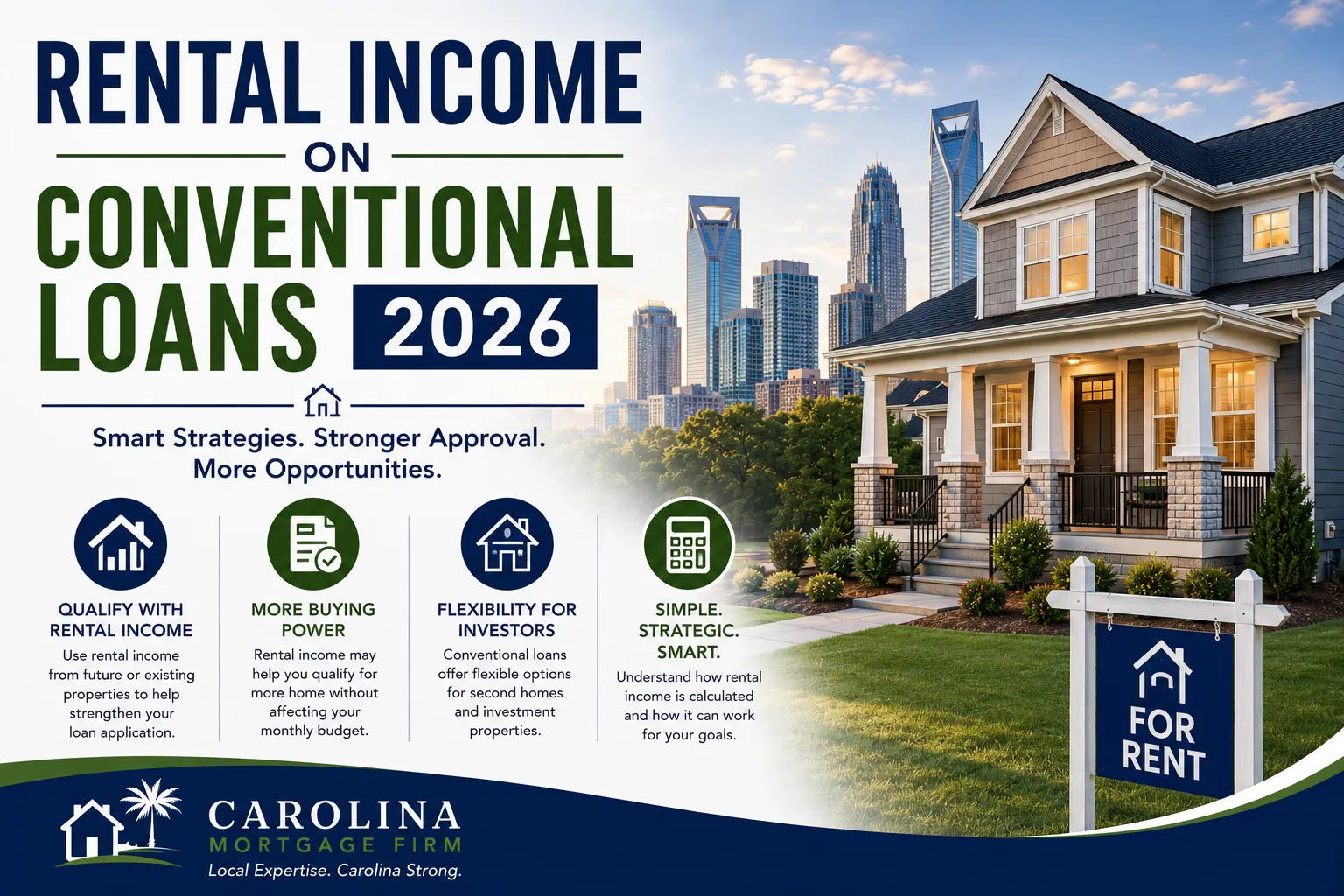
Yes, in many cases rental income can be used to help qualify for a conventional mortgage.
In fact, rental income is one of the most powerful tools available for increasing purchasing power and building long-term wealth through real estate.
At Carolina Mortgage Firm, we help homeowners and investors throughout Charlotte, Fort Mill, Indian Land, Rock Hill, Lancaster, Matthews, Waxhaw, Belmont, Huntersville, and surrounding communities understand how lenders evaluate rental income and how it affects mortgage qualification.
Let’s break down how conventional lenders calculate rental income and what you need to know before applying.
Quick Answer: Rental Income Can Often Be Used to Qualify
Conventional mortgage guidelines often allow borrowers to use rental income from:
Existing Rental Properties Multi-Unit Properties
New Investment Property Purchases Converted Primary Residences
However, the income is not always counted dollar-for-dollar.
Lenders generally apply specific calculations designed to account for vacancies, maintenance, and other real-world ownership costs.
Why Rental Income Matters
Rental income can significantly increase your borrowing power. For example:
Without Rental Income:
Annual Income: $90,000 With Rental Income:
Annual Income: $90,000 Rental Income: $18,000
Total Qualifying Income: $108,000
This additional income may allow borrowers to qualify for:
- Larger homes
- Additional investment properties
- Vacation homes
- Better financing options
What Types of Rental Income Can Be Used?
Several forms of rental income may be eligible.
Existing Rental Property Income
Income from properties already owned and rented.
Multi-Family Property Income
Income from duplexes, triplexes, and fourplexes.
Boarder or Roommate Income
Certain situations may allow consideration of boarder income.
New Investment Property Income
Projected rental income from newly purchased investment properties.
Each category follows different documentation requirements.
Rental Income From Existing Properties
This is one of the most common scenarios. Lenders often review:
Tax Returns
Schedule E Forms Lease Agreements Current Rental History
The goal is determining actual rental income generated by the property.
Historical performance often plays an important role.
What Is Schedule E?
Schedule E is a section of your federal tax return used to report rental property income and expenses. Lenders frequently review:
Gross Rental Income Property Expenses Depreciation
Because tax returns often include non-cash deductions such as depreciation, mortgage calculations may differ from taxable income calculations.
This is why working with an experienced mortgage professional is important.
Can I Use Rental Income From a Newly Purchased Investment Property?
Often yes.
For many conventional investment property purchases, lenders may use:
Market Rent Estimates
provided by the appraiser.
The appraiser typically completes a rental analysis to estimate market rents for the property. This projected income may help support qualification.
Rental Income and Multi-Unit Properties
One of the most powerful opportunities available involves:
Duplexes Triplexes Fourplexes
Buyers may be able to occupy one unit while renting the others. Potential benefits include:
- Additional income
- Increased purchasing power
- Long-term wealth building
Many first-time investors begin with multi-unit properties.
What About Airbnb and Short-Term Rental Income?
Short-term rental income has become increasingly popular. Examples include:
- Airbnb
- VRBO
- Vacation rentals
The treatment of short-term rental income depends on:
- Loan program
- Documentation
- Income history
- Property type
Because these situations can be complex, individual review is important.
Why Lenders Don’t Count 100% of Rent
One of the most common questions borrowers ask is:
“Why can’t the lender use all of my rental income?”
The answer is simple.
Rental properties experience:
Vacancies Maintenance Costs Repairs
Lenders apply adjustments to account for these realities.
This helps ensure borrowers can comfortably manage their mortgage obligations.
Common Rental Income Mistakes
Not Reporting Rental Income Properly
Tax return documentation matters.
Poor Record Keeping
Incomplete records can create underwriting challenges.
Assuming Gross Rent Equals Qualifying Income
Mortgage calculations differ from landlord calculations.
Waiting Until Contract to Review Qualification
Investors should review financing options early.
Rental Income vs Self-Employment Income
Many real estate investors own properties personally while operating businesses separately. Lenders evaluate:
Rental Income
and
Self-Employment Income
under different guidelines.
Understanding these distinctions can maximize qualification opportunities.
Common Rental Income Myths
Myth #1: Rental Income Doesn’t Count
False.
Rental income frequently helps borrowers qualify.
Myth #2: Only Experienced Investors Can Use Rental Income
False.
New investors may qualify as well.
Myth #3: Airbnb Income Is Always Ineligible
False.
Certain circumstances may allow consideration.
Myth #4: One Rental Property Won’t Help
False.
Even modest rental income can increase purchasing power.
How Rental Income Can Increase Buying Power
Let’s look at an example. Borrower Income: $100,000 Annual Rental Income: $24,000 Total Qualifying Income: $124,000
This additional income may increase:
Maximum Loan Amount Property Options Investment Opportunities Financing Flexibility
Proper rental income analysis can make a substantial difference.
Why Pre-Approval Matters
Before purchasing an investment property—or using rental income to qualify—obtaining a pre-approval is essential.
Benefits include:
Accurate Income Analysis Loan Program Comparison Budget Planning
Investment Strategy Development Faster Closings
Many investors discover opportunities they didn’t realize were available.
Why Work With Carolina Mortgage Firm?
At Carolina Mortgage Firm, we help buyers and investors throughout:
- Charlotte
- Fort Mill
- Indian Land
- Rock Hill
- Lancaster
- Matthews
- Waxhaw
- Belmont
- Huntersville
- Concord
understand rental income guidelines and maximize their borrowing power. We compare:
- Conventional Loans
- FHA Loans
- VA Loans
- DSCR Loans
- Investment Property Financing
- Bank Statement Loans
to identify the strategy that best supports your goals.
Frequently Asked Questions
Can Rental Income Be Used for a Conventional Loan?
Often yes.
Can I Use Income From an Investment Property I’m Buying?
In many situations, yes.
What Documents Are Required?
Typically leases, tax returns, Schedule E forms, and appraisal reports.
Can Airbnb Income Be Used?
Possibly, depending on documentation and loan guidelines.
Should I Get Pre-Approved Before Looking at Investment Properties?
Absolutely.
Related Conventional Resources
- What Credit Score Is Needed for a Conventional Loan?
- Can I Buy a Home With 3% Down?
- Can Bonus Income Be Used to Qualify?
- Can Commission Income Be Used for a Mortgage?
- How Much Reserve Funds Do I Need for a Conventional Loan?
Ready to See How Rental Income Can Increase Your Buying Power?
Whether you’re purchasing your first duplex in Rock Hill, expanding a rental portfolio in Charlotte, investing in Fort Mill, or building long-term wealth in Lancaster County, Carolina Mortgage Firm can help you understand your financing options.
Contact Carolina Mortgage Firm today for a personalized mortgage consultation and investment property review.