Few financial events create more confusion about homeownership than bankruptcy. One of the most common questions we hear at Carolina Mortgage Firm is:
“Can I get an FHA loan after bankruptcy?”
The answer is:
Yes.
In fact, many buyers are surprised to learn that FHA loans often allow borrowers to qualify much sooner than they expected after a bankruptcy filing.
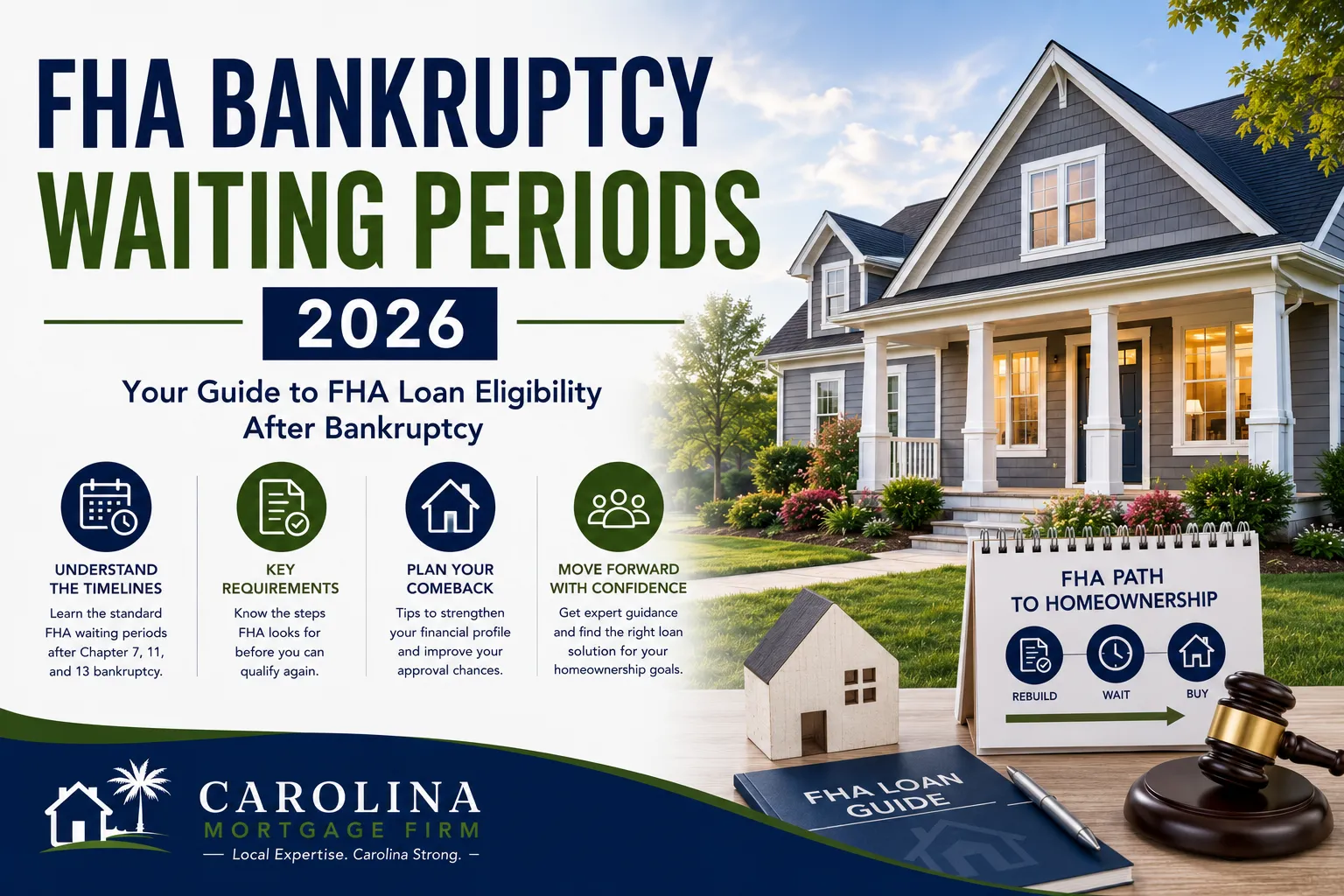
Whether you’ve experienced a Chapter 7 or Chapter 13 bankruptcy, understanding FHA waiting periods and qualification requirements can help you create a realistic plan for purchasing a home.
At Carolina Mortgage Firm, we regularly help buyers throughout Charlotte, Fort Mill, Indian Land, Rock Hill, Lancaster, Matthews, Waxhaw, and surrounding communities navigate homeownership after financial hardship.
Let’s take a closer look at how FHA bankruptcy guidelines work.
Quick Answer: FHA Bankruptcy Waiting Periods
The required waiting period depends on the type of bankruptcy filed.
Chapter 7 Bankruptcy
Generally requires a 2-year waiting period from the discharge date.
Chapter 13 Bankruptcy
In some situations, borrowers may qualify while still in an active Chapter 13 repayment plan with court approval and satisfactory payment history.
Because every situation is unique, a personalized review is essential.
Why FHA Loans Are Popular After Bankruptcy
FHA loans were designed to expand access to homeownership. Compared to some other mortgage programs, FHA often provides:
- More flexible credit guidelines
- Lower down payment requirements
- More forgiving treatment of past financial events
- Faster recovery opportunities
For borrowers rebuilding after bankruptcy, FHA financing is frequently one of the best available options.
Understanding Chapter 7 Bankruptcy
Chapter 7 bankruptcy involves the discharge of certain debts. After the bankruptcy is discharged, FHA generally requires:
Two Years From Discharge
The waiting period typically begins on the discharge date, not the filing date. Many borrowers mistakenly calculate their timeline from the filing date.
The discharge date is what matters for FHA eligibility.
What Happens During the Two-Year Waiting Period?
The waiting period provides an opportunity to rebuild your financial profile.
Lenders like to see:
Re-Established Credit
New credit accounts managed responsibly.
On-Time Payments
Consistent payment history after bankruptcy.
Stable Employment
Reliable income and employment history.
Savings Growth
Funds available for down payment and closing costs. These positive financial habits help demonstrate recovery.
Understanding Chapter 13 Bankruptcy
Chapter 13 differs from Chapter 7 because it involves a structured repayment plan.
In certain circumstances, FHA may allow financing before the repayment plan is fully completed. Requirements often include:
Court Approval
Permission from the bankruptcy trustee or court.
Satisfactory Payment History
Typically a demonstrated history of on-time bankruptcy payments.
Mortgage Qualification
The borrower must still meet all FHA income, credit, and debt requirements. Because Chapter 13 situations vary significantly, individual review is important.
Can I Qualify Before the Waiting Period Ends?
In most situations, standard FHA waiting periods apply. However, certain circumstances may warrant additional review.
Mortgage guidelines change periodically, and exceptions can be highly fact-specific.
The best approach is discussing your situation with a mortgage professional as early as possible.
Bankruptcy Does Not Mean Bad Credit Forever
One of the biggest misconceptions about bankruptcy is that it permanently prevents homeownership. That is simply not true.
Many borrowers experience:
Credit Score Improvement
Within months of bankruptcy discharge.
Reduced Debt Burdens
Creating stronger debt-to-income ratios.
Improved Financial Stability
After eliminating overwhelming obligations.
Successful Homeownership
Much sooner than expected.
The key is establishing positive financial habits after bankruptcy.
Tips for Rebuilding After Bankruptcy
If you’re planning to buy a home in the future, consider the following steps.
Make Every Payment On Time
Payment history remains one of the most important factors in mortgage qualification.
Monitor Your Credit Reports
Ensure discharged debts are reported accurately.
Avoid Excessive New Debt
Only open new accounts when necessary.
Build Savings
Down payment and reserve funds strengthen applications.
Maintain Stable Employment
Consistency helps demonstrate financial recovery.
FHA Bankruptcy vs Conventional Bankruptcy Waiting Periods
Many buyers compare FHA and Conventional financing.
FHA Loans
Often provide more flexible treatment of past credit events.
Conventional Loans
May have different seasoning requirements depending on the circumstances.
Because guidelines vary, many borrowers recovering from bankruptcy find FHA financing to be the most accessible option.
Common Bankruptcy Myths
Myth #1: I Can Never Buy a Home Again
False.
Many borrowers successfully purchase homes after bankruptcy.
Myth #2: Bankruptcy Automatically Means Bad Credit Forever
False.
Credit scores often improve significantly after discharge.
Myth #3: I Must Wait Seven Years
False.
FHA eligibility is often available much sooner.
Myth #4: No Lender Will Approve Me
False.
FHA financing was specifically designed to help borrowers recover from financial setbacks.
Why Pre-Approval Matters
If you’ve experienced bankruptcy, obtaining a pre-approval is one of the most important steps you can take. Benefits include:
Determining Eligibility
Confirm whether waiting periods have been satisfied.
Reviewing Credit
Identify any issues that need attention.
Creating a Timeline
Understand when purchasing becomes realistic.
Exploring Loan Options
Compare FHA, Conventional, VA, and USDA financing.
Many borrowers discover they qualify sooner than they anticipated.
Why Work With Carolina Mortgage Firm?
At Carolina Mortgage Firm, we help buyers throughout:
- Charlotte
- Fort Mill
- Indian Land
- Rock Hill
- Lancaster
- Matthews
- Waxhaw
- Belmont
- Huntersville
- Concord
navigate mortgage qualification after bankruptcy. Because we work with multiple lenders, we can compare:
to identify solutions that fit your financial goals.
Our mission is helping buyers move forward after life’s financial challenges.
Frequently Asked Questions
How Long After Chapter 7 Can I Get an FHA Loan?
Generally two years from the discharge date.
Can I Get an FHA Loan During a Chapter 13?
Possibly, depending on the circumstances and required approvals.
Does Bankruptcy Permanently Prevent Homeownership?
No.
Do I Need Perfect Credit After Bankruptcy?
No.
Should I Get Pre-Approved Before House Hunting?
Absolutely.
Related FHA Resources
- What Credit Score Do I Need for an FHA Loan?
- FHA Down Payment Requirements
- FHA Co-Borrower Guidelines
- FHA Gift Funds Requirements
- FHA Loan Limits in North and South Carolina
Ready to Explore FHA Financing After Bankruptcy?
If you’ve experienced a Chapter 7 or Chapter 13 bankruptcy and want to understand your homebuying options, Carolina Mortgage Firm can help.
Whether you’re buying in Charlotte, Fort Mill, Indian Land, Rock Hill, Lancaster, or anywhere throughout North and South Carolina, our team can review your situation and help create a personalized path toward homeownership.
Contact Carolina Mortgage Firm today for a confidential mortgage consultation and FHA eligibility review.