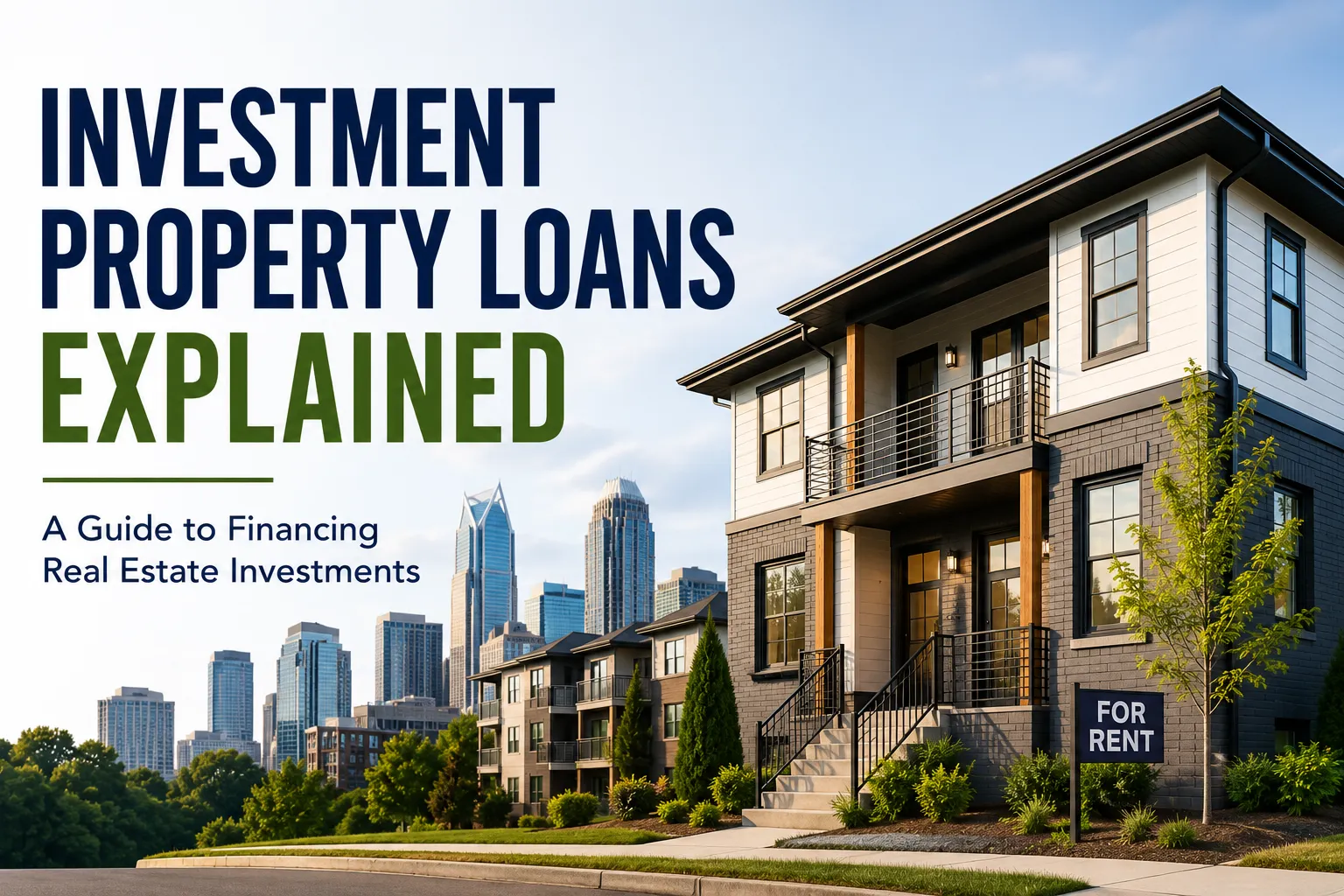
Real estate has long been one of the most effective ways to build long-term wealth.
Whether you’re purchasing your first rental property, expanding your portfolio, buying a vacation rental, or investing in short-term rentals, understanding your financing options is critical.
At Carolina Mortgage Firm, we help investors throughout Charlotte, Fort Mill, Indian Land, Rock Hill, Lancaster, Lake Norman, Waxhaw, Matthews, and surrounding communities secure financing for investment properties of all sizes.
One of the biggest misconceptions about real estate investing is that you need to be wealthy to get started. The truth is that many successful investors begin with a single property and grow their portfolios over time.
Understanding the financing options available can help you determine the best strategy for your investment goals.
What Is an Investment Property?
An investment property is a property purchased primarily to generate income rather than serve as the owner’s primary residence.
Examples include:
Long-Term Rental Properties
Homes leased to tenants under annual or multi-year agreements.
Vacation Rentals
Properties used seasonally or periodically.
Short-Term Rentals
Properties listed through platforms such as Airbnb or VRBO.
Multi-Unit Properties
Duplexes, triplexes, and four-unit properties.
Fix-and-Hold Properties
Homes purchased for renovation and long-term rental income. Each property type may have different financing requirements.
Why Real Estate Investing Remains Popular
Investors are attracted to real estate because it offers multiple potential benefits.
Cash Flow
Monthly rental income can create ongoing revenue.
Appreciation
Property values may increase over time.
Tax Advantages
Investment properties may provide tax benefits through depreciation and expense deductions.
Leverage
Real estate allows investors to control larger assets using financing.
Wealth Building
Many investors use rental properties as part of a long-term retirement strategy.
Types of Investment Property Loans
Several financing options are available.
Conventional Investment Property Loans
One of the most common options. Benefits include:
- Competitive interest rates
- Fixed-rate options
- Long-term financing
These loans often work well for borrowers with strong income and credit profiles.
DSCR Loans (Debt Service Coverage Ratio)
DSCR loans have become increasingly popular among investors.
Rather than focusing heavily on personal income, lenders evaluate whether the property’s rental income supports the mortgage payment.
Benefits include:
- Simplified qualification
- Investor-friendly guidelines
- Portfolio growth opportunities
- Reduced income documentation requirements Many experienced investors prefer DSCR financing.
Bank Statement Loans
For self-employed investors, bank statement loans can provide flexibility. Instead of relying primarily on tax returns, lenders may evaluate:
- Personal bank statements
- Business bank statements
- Cash flow history
These programs often benefit entrepreneurs and business owners.
Jumbo Investment Property Loans
Higher-value investment properties may require jumbo financing. These programs are commonly used for:
- Luxury rentals
- High-value vacation properties
- Premium vacation destinations
- Executive housing
How Much Down Payment Is Required?
One of the most common questions investors ask is:
“How much do I need down?”
Investment property down payment requirements are generally higher than primary residence financing. The exact amount depends on:
- Loan program
- Property type
- Credit score
- Occupancy
- Number of units
A mortgage consultation can determine available options based on your specific goals.
Credit Score Requirements
Investment property financing generally rewards stronger credit profiles. Higher scores often provide:
- Better pricing
- More financing options
- Lower down payment requirements
However, investors do not necessarily need perfect credit to qualify.
Many programs offer flexibility depending on the overall financial picture.
Can Rental Income Help You Qualify?
Yes.
Many loan programs allow lenders to consider rental income. Examples include:
Existing Rental Properties
Documented rental income may help support qualification.
New Investment Purchases
Projected rental income may be considered depending on the program.
Multi-Unit Properties
Additional units may generate qualifying income.
Rental income treatment varies by loan type and borrower profile.
Investment Properties in the Carolinas
The Charlotte Metro region continues to attract investors because of:
- Population growth
- Strong job market
- Economic expansion
- Housing demand
Popular investment markets include:
North Carolina
- Charlotte
- Lake Norman
- Belmont
- Concord
- Huntersville
- Mooresville
South Carolina
- Fort Mill
- Indian Land
- Rock Hill
- Lancaster
- Tega Cay
- Lake Wylie
These communities continue to experience strong housing demand.
Long-Term Rentals vs Short-Term Rentals
Investors often compare these strategies.
Long-Term Rentals
Advantages:
- Consistent income
- Reduced management intensity
- Stable occupancy Short-Term Rentals Advantages:
- Higher potential revenue
- Flexible owner usage
- Vacation rental opportunities
The best strategy depends on your goals, location, and risk tolerance.
Common Investment Property Mistakes
Waiting Too Long to Get Pre-Approved
Financing should be evaluated before shopping.
Underestimating Expenses
Investors should budget for:
- Maintenance
- Vacancies
- Property management
- Repairs
Focusing Only on Appreciation
Cash flow remains important.
Choosing the Wrong Loan Program
Different financing options serve different goals.
Why Pre-Approval Matters
Before searching for investment properties, obtaining a pre-approval is essential. Benefits include:
Understanding Budget
Know your purchasing power.
Comparing Loan Options
Evaluate Conventional, DSCR, and alternative financing.
Moving Quickly
Investment opportunities often require fast action.
Strengthening Offers
Sellers prefer serious, qualified buyers.
Why Work With Carolina Mortgage Firm?
At Carolina Mortgage Firm, we help investors throughout:
- Charlotte
- Fort Mill
- Indian Land
- Rock Hill
- Lancaster
- Lake Norman
- Waxhaw
- Matthews
- Belmont
- Concord
identify financing strategies tailored to their investment goals. We compare:
- Conventional Investment Loans
- DSCR Loans
- Bank Statement Loans
- Jumbo Financing
- Portfolio Lending Solutions
Our goal is helping investors build wealth through smart financing decisions.
Frequently Asked Questions
Can I Buy an Investment Property With Little Money Down?
Requirements vary by loan program.
What Is a DSCR Loan?
A loan that focuses heavily on property cash flow rather than personal income.
Can Rental Income Help Me Qualify?
Often yes.
Are Interest Rates Higher for Investment Properties?
Generally, investment property financing carries different pricing than primary residence loans.
Should I Use an LLC?
You should consult legal and tax professionals regarding ownership structures.
Internal Links
Link this article to:
- Bank Statement Loans
- Mortgage Pre-Approval Guide
- Jumbo Loans in the Carolinas
- Buying a Second Home in the Carolinas
- Mortgage Broker vs Bank
- Mortgage Rate Lock Strategies
Ready to Finance Your Next Investment Property?
Whether you’re purchasing your first rental property in Rock Hill, expanding a portfolio in Charlotte, investing in Fort Mill, or exploring opportunities in Lancaster County, Carolina Mortgage Firm can help you evaluate financing options and develop a strategy for long-term success.
Contact our team today for a personalized investment property consultation.